
Farm raised bluefin tuna
From Mexico and Croatia
Our tuna farming process begins with carefully selected wild tuna and continues under closely controlled conditions throughout each production cycle. Through carefully selected nutrition and a precise feeding program, our contracted farms enhance the tuna’s overall quality—particularly its rich color and desirable fat content.




FARM-RAISED BLUEFIN TUNA — Carefully Managed from Ocean to Table
Farm-raised Bluefin Tuna begins with wild Bluefin Tuna harvested by purse-seine vessels within the annual fishing quotas established by the applicable fisheries management authorities, including NOAA regulations.
The tuna are transferred to offshore pens located in areas generally characterized by relatively strong currents, cooler seawater temperatures, and a low risk of harmful algal blooms, providing a healthy environment for the tuna to grow.
After being captured and transferred to the farming pens, the tuna typically experience stress and have little appetite during the first month. The benefits of controlled feeding begin to become more apparent over the following several months.
During the initial feeding period, the tuna are provided with high-fat baitfish such as herring, mackerel, and sardines. Because feeding activity decreases when seawater temperatures become too cold during winter, the spring and summer months, when the tuna's appetite is strongest, are particularly important for building quality and fat content.
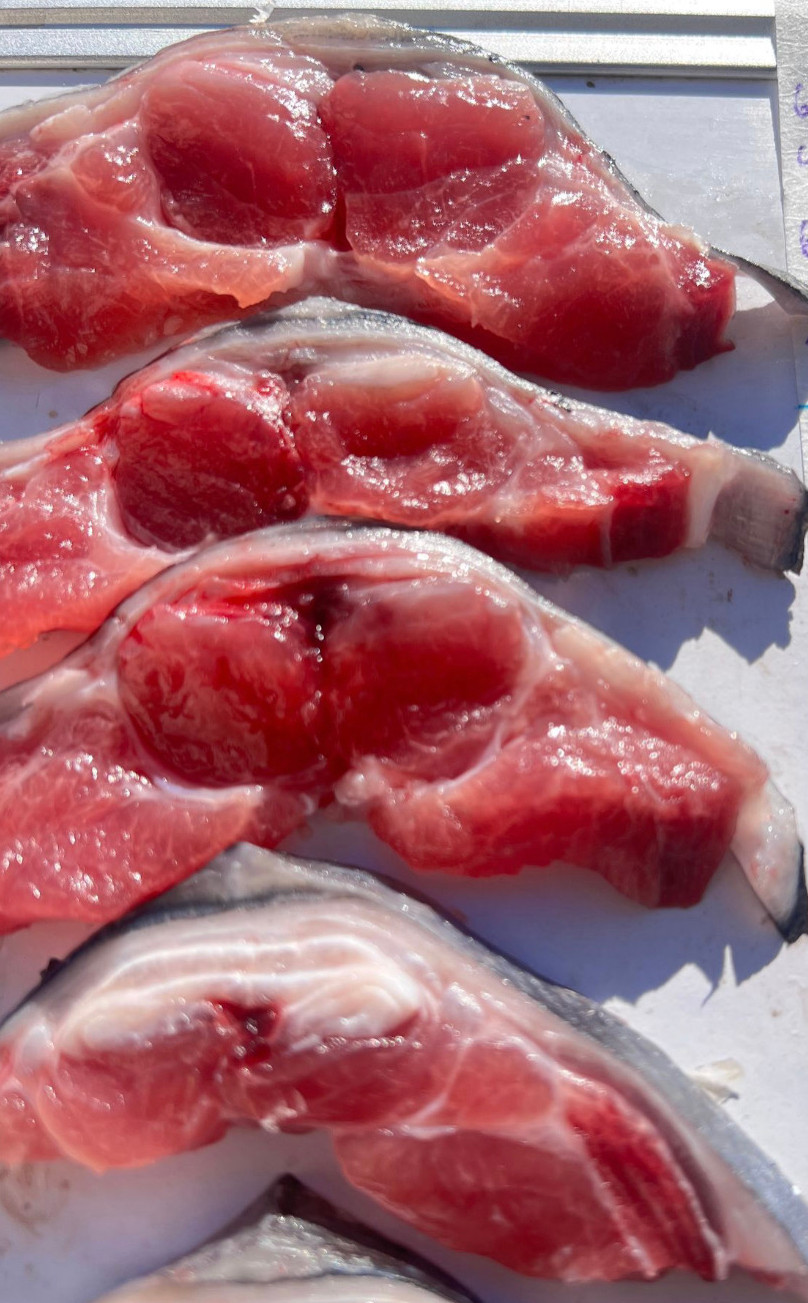
The frequency and quantity of feeding, as well as the fat content of the feed, are key factors in determining the tuna's fat distribution. Through careful and precise adjustment, producers can develop Bluefin Tuna with an excellent balance of lean meat (Akami), medium-fatty meat(Chutoro), and fatty meat (Otoro).
HARVESTING & POST-HARVESTING HANDLING
One of the most critical aspects of farm-raised Bluefin Tuna is how the fish are harvested from the pens.
The tuna must be handled quickly and calmly to minimize struggling. Excessive movement can cause a rapid increase in body temperature and accelerate the breakdown of glycogen in the muscle. This can result in “burnt meat” (Yake), leading to poor texture, excessive acidity, rapid discoloration, and deterioration of quality—making the tuna unsuitable for premium sashimi.
For this reason, at harvest, the tuna are rapidly and humanely dispatched using methods such as electric stunning or an underwater killing device.
Immediately after harvest, the tuna undergo nerve spiking (Shinkei-jime), thorough bleeding, and chilled saltwater treatment. A chilled saltwater tube is inserted into the blood vessels to thoroughly flush residual blood from the vascular system. This meticulous process helps minimize blood retention and unwanted odors in the bloodline.
The tuna are then packed in ice for approximately 24 hours, bringing the internal temperature down to approximately 1–3°C (34–37°F) and maintaining that temperature through carefully controlled packaging.
JAPANESE TUNA PROCESSING EXPERTISE
These advanced tuna harvesting and post-harvest handling techniques have been developed and refined through Japanese tuna-processing expertise. Ever stage -- from harvesting and bleeding to nerve treatment, vascular flushing, rapid chilling, and packaging - is carried out with the utmost care.
The result is premium Bluefin Tuna with exceptional flavor, texture, color, and fat distribution.
And because the farming environment and feeding program can be carefully managed, farm-raised Bluefin offers another important advantage: a consistent, reliable supply of high-quality tuna throughout the year.

