
Wild bluefin tuna
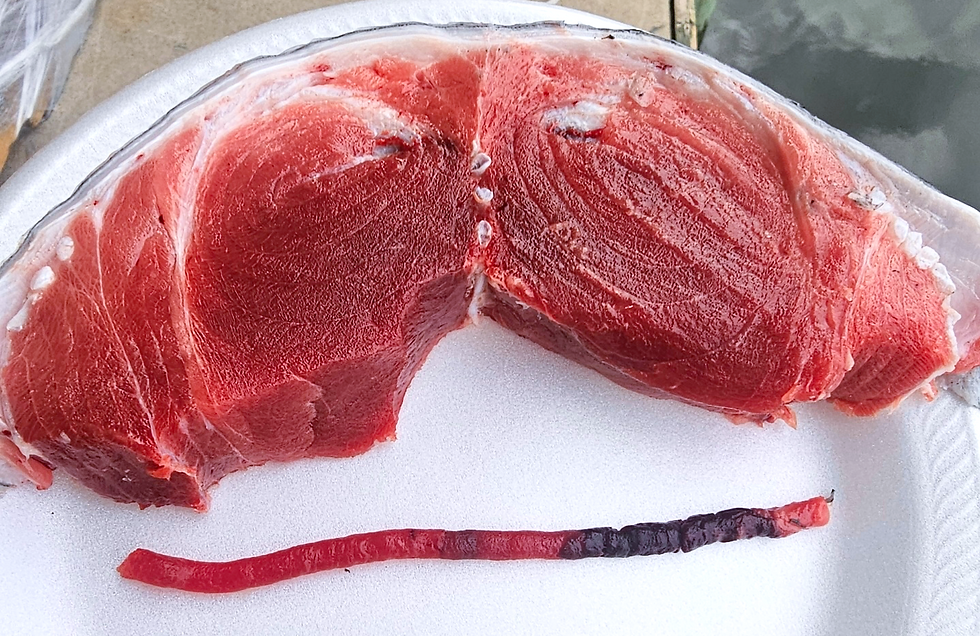
Our Wild Bluefin Tuna is sourced from Boston, Gloucester, North Carolina, and Louisiana, along with select Southern Bluefin Tuna imported from South Africa and New Zealand. This combination provides a year-round supply of fresh, high-quality bluefin with excellent shape, rich fat content, and an appealing pinkish color. Fresh off the boat, the beautiful tail cuts display natural white marbling—a sign of higher fat content that becomes even more pronounced as the fish chills. Each fish is carefully processed, held in our cooler, and ready to pack.



WILD BLUEFIN TUNA — Catching Methods
Wild Bluefin Tuna are primarily caught using three methods:
1. ROD & REEL FISHING — Allowing the Tuna to Swim
One of the most important steps after landing a Bluefin Tuna is to allow the fish to swim and recover.
A tuna caught by rod and reel experiences significant physical stress during the fight. Allowing it to swim for approximately 45 minutes gives the fish time to calm down and recover.
As the fish becomes calmer, lactic acid levels in the muscles decrease, helping to reduce the risk of “yake,” or burnt meat, which can severely affect the texture, color, flavor, and overall value of the tuna.
At the same time, seawater continuously passes through the fish's mouth and gills as it swims, helping to dissipate body heat and gradually lower its core temperature.
The objective is simple: Reduce stress → lower lactic acid → reduce body temperature → protect the quality of the meat.
2. HARPOON FISHING
With harpoon fishing, minimizing physical damage to the fish is critical.
Whenever possible, the harpoon should avoid the belly and valuable muscle areas. A poorly placed harpoon can cause bruising or damage to the meat, significantly reducing the tuna's quality and market value.
The key is to dispatch the tuna quickly while minimizing damage to the body.
3. LONG LINE FISHING
Longline fishing is another important method for harvesting high-quality Bluefin Tuna.
Because the fish are caught individually on hooks, rather than being crowded together in a large net, there is generally less physical contact and damage between fish.
Maintaining High Quality and Freshness
- Excellent meat quality
Individual hook-and-line capture can reduce the bruising and physical damage that may occur when large numbers of fish are confined together in a purse seine.
- Reduced risk of "Yake"
Proper handling after capture helps minimize excessive struggling, stress, and body-temperature increases, reducing the risk of quality deterioration associated with burnt meat.

