
WIld yellowfin tuna
Our wild yellowfin tuna is caught by longline vessels in waters off New Jersey, Connecticut, North Carolina, and Louisiana. We also source premium imported tuna from Japan, Sri Lanka, Canada, South Africa, and New Zealand—bringing exceptional quality and freshness to every order.


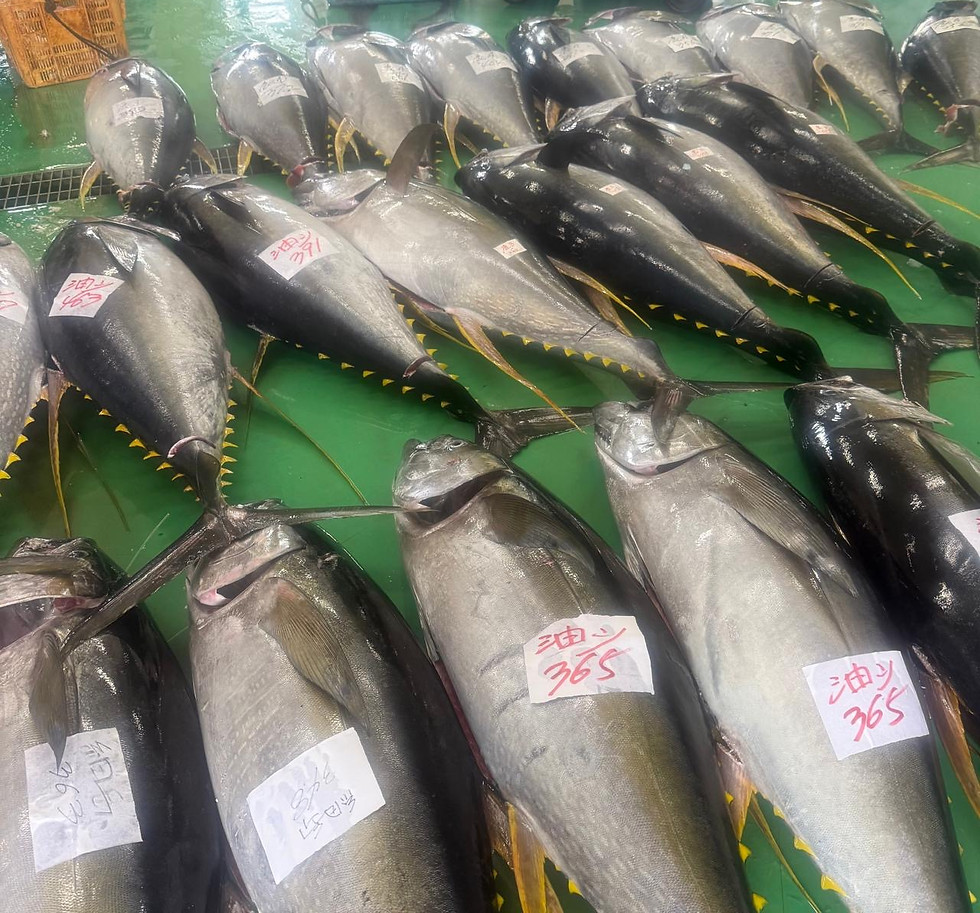

Wild Yellowfin Tuna — Habitat, Meat Quality & Color
Wild Yellowfin Tuna generally inhabit shallower waters than Bigeye Tuna and often travel in schools.
Fishing Method and Meat Quality
As with Bigeye Tuna, Yellowfin caught individually by longline fishing can offer important quality advantages. Because the fish are caught one at a time, physical damage and excessive stress can be reduced, helping to minimize the risk of “yake” (burnt meat).
When properly managed, longline fishing can also be a more selective and sustainable fishing method, supporting responsible resource management.
Water Temperature and Diet Influence Meat Quality
The meat quality and coloration of Yellowfin Tuna are influenced by a variety of environmental and biological factors, including water temperature and the fish’s diet.
Water temperature affects the tuna’s metabolism and swimming activity, which can influence the firmness, texture, and coloration of the meat.
This is also true of Bigeye and Bluefin Tuna. In general, tuna harvested from relatively cooler waters influenced by cold currents may have firmer meat and, in some cases, a particularly vivid cherry-red coloration.
What Determines the Color of Yellowfin Tuna?
The color of Yellowfin Tuna is influenced by a combination of: Habitat and environment, diet and nutritional condition, swimming activity, myoglobin in the muscle, as well as capture and handling methods. All these factors interact to determine the final market value, freshness, and flavor.

