
Wild Bigeye tuna
Our Wild Bigeye Tuna is caught by long-line vessels and sourced from the waters off New Jersey, Connecticut, North Carolina, and Hawaii. We also offer carefully selected imported Bigeye Tuna from Japan, Canada, the Marshall Islands, Ecuador, South Africa, and New Zealand—bringing together trusted domestic and international sources.

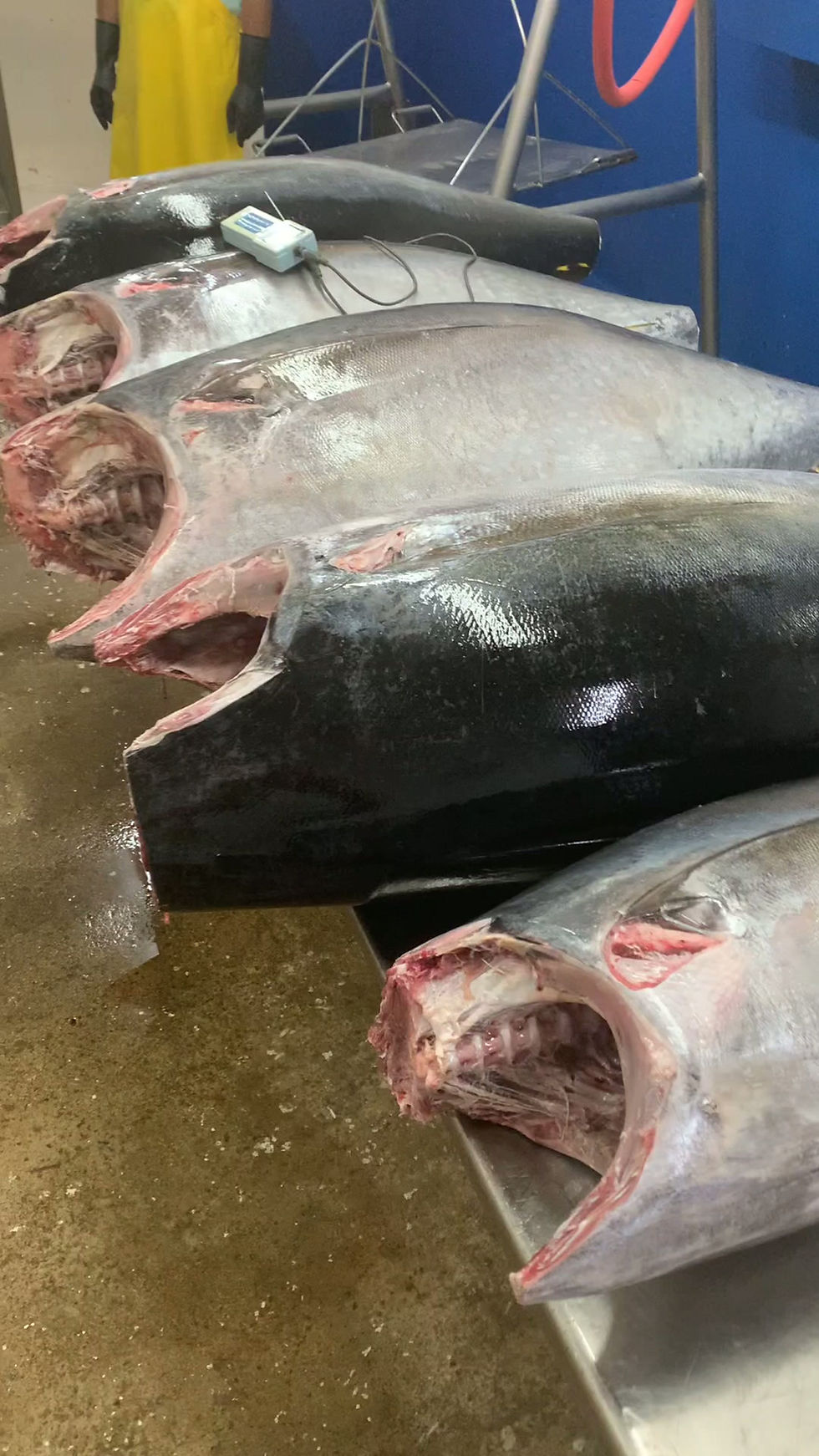

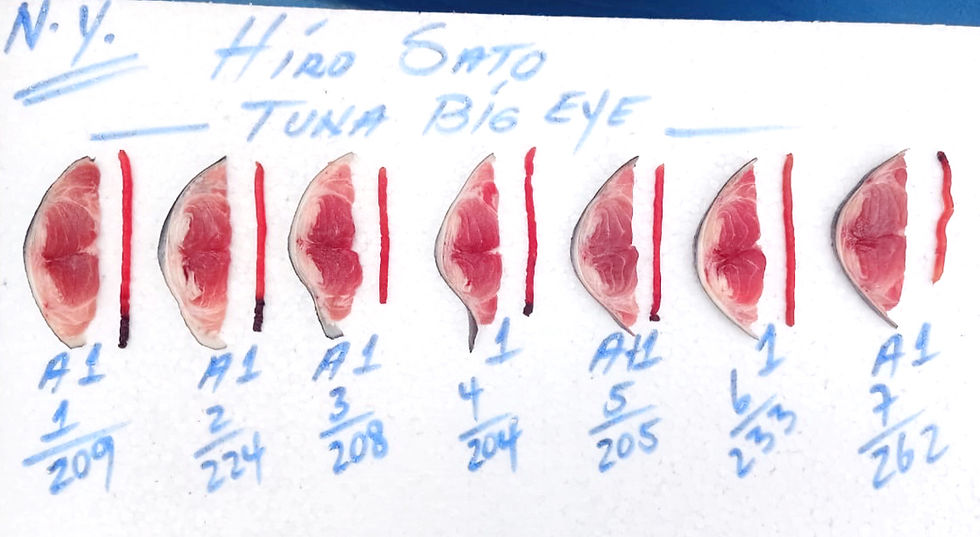


Wild Bigeye Tuna
Catching Methods
Wild Bigeye Tuna are primarily harvested using several fishing methods, including Rod & Reel / Hand-line Fishing and Longline Fishing.
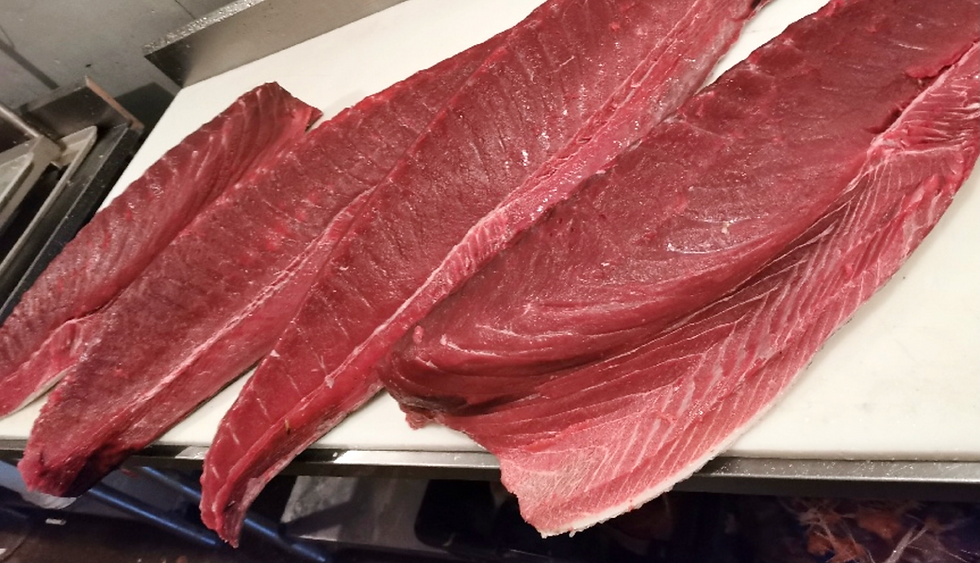
1. Rod & Reel / Hand-line Fishing
Rod-and-reel fishing can help minimize physical damage to the fish. However, it carries a significant risk of “yake” because the tuna may struggle intensely during the fight.
Excessive struggling can increase stress and body temperature, potentially resulting in quality deterioration. Therefore, careful handling immediately after capture is essential.
2. Longline Fishing
Longline Fishing is one of the best methods for harvesting high-quality Bigeye Tuna
With longline fishing, tuna are caught individually on hooks, rather than being crowded together in a large net. This generally reduces physical contact bertweeen fish and helps minimize bruising and damage.
Maintaining High Quality and Freshness
- Excellent meat quality
Individual hook-and-line capture can reduce the bruising, abrasion, and physical damage that may occur when large numbers of fish are confined together in a purse seine.
- Reduced risk of "Yake"
Proper handling after capture helps minimize excessive struggling, stress, and increases in body temperature, thereby reducing the risk of "Yake" and other quality deterioration.
Environmental & Resource-Management Advantages
-Selective fishing method
Longline fishing can selectively target particular species and sizes. Compared with bottom trawling, it has considerably less direct impact on the seafloor.
- Protection of younger fish
When properly regulated, size limits and fishing restrictions can help target mature fish while reducing the capture of smaller, immature tuna, supporting sustainable resource management.
What Determines the Quality of Wild Bigeye Tuna?
The quality of wild Bigeye depends not only on how the fish is caught, but also on how it is handled immediately after capture.
Catching method, Stress Control, Temperature Management, Bleeding, Nerve Treatment, and Chilling.
Careful control of this entire process is essential to preserve the tuna's color, texture, flavor, fat, quality, freshness, and ultimately its market value.
